
Know What People Are Thinking?
And how busy are you?

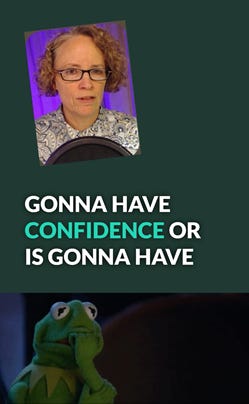
It's 2026, and most of us have been well-trained to accept demographic conclusions. And then act on them. “Parents in this zip code are more willing to invest in the future of their under-14 children.” “Adults love Kermie because they relate to his naïveté, anxieties, and wild joy.” Demographics don't cause cognition, therefore organizations are making very risky decisions.
Stop Using Demographics
Demographic assumptions are natural, insidious, and easy to spot once you know how to question them. Check out the short videos below. I promise they will make you laugh. AND begin to ask why when demographics are rolled out.
INTRO: There is a place where demographics are okay, which is population-level tracking to see the overall direction of progress. (But please don’t make decisions without finding out why using deeper techniques.) [choose video on LinkedIn or Instagram]
REASON #1: Our market segments, personas, or thinking styles are typically NOT population-level. If you use demographics, you cause harmful assumptions. [LinkedIn or Instagram]
REASON #2: Propaganda and fear-mongering are underpinned by demographics, which ought to have nothing to do with product, but it influences decision-making. [LI or Insta]
REASON #3: Demographics are used in places we respect: economists have a bad habit of inserting demographics about very small samples [LI or Insta]
REASON #4: Academics need attention (and grant money), so demographic assumptions serve them well. [LI or Insta]
REASON #5: Every human brain subconsciously accepts what it hears about demographic groups. When you see it, learn how to ask why?!! [LI or Insta]
REASON #6: Thinking styles are for making progress, seeing opportunities, and measuring how you are helping someone address their own aim, goal, or purpose. Thinking styles help teams uncloud their vision. [LI or Insta]
Why not learn with me?
Practice Group for Australia/Asia Time Zone
Starts: Friday 21-August-2026 (morning)
Runs: six weeks
Takes: 30 minutes a day (to watch lessons) and 2 hours a week (together with me and the rest of the group)
Something new: Thinking Styles, how to find the patterns and what incredible new things to use them for (AI, behavior design, and more)
Western Canadians and the Americans are welcome—their Thursday evenings
Business-applied course (with practice group) about Finding Thinking Styles in cognition starts 21-Aug (for the Australia/Asia time zones) (*20-Aug for Americas/Canada)
I teach product and design teams to avoid demographics. I wish I could teach leadership, but they don’t know I exist. (And yes! If you caught that, that last sentence is a demographic assumption! 😆)
People really enjoy these practice groups! 🩷
How Busy Are You?
Too busy. I know what you mean. No one I know is happy with their level of busy-ness. 🙁 But (hopefully, possibly) your mind is still keen. Lots of people still have their curiosity. They’re not burned-out. They’re checking into what’s possible.
And it’s possible to understand what people are thinking and find patterns (Thinking Styles) to guide your product strategy.
I believe knowing people’s cognition even more powerful now that AI is on the scene.
Tell Your Manager It Makes a HUGE Difference
Difference is key, especially in this era.
Thinking styles are different than market segments and personas, and these differences make your work more solid than a “bet” or an “experiment.”
Thinking styles are different:
drawn from patterns across people’s cognition (inner thinking, emotional reactions, personal rules)
as they addressed their own aim, goal, or purpose (which is never “use that tool”)
demographics-free (wait, what?)
empower product teams to reduce risk and really increase success
Let’s get some keen minds together!
🥰 If you enjoy my newsletter, you can now contribute $1 a month. Or 80 cents. Or 50 cents — the lowest bank threshold. (None of this money goes to Substack or LinkedIn or Medium, or any of those platforms. Nope.)
(To cancel your contribution at any time, reach out to me via indiyoung.com)